
Day 1: Arrival in Kathmandu
Upon arrival in Kathmandu, having cleared immigration and customs, you will be received by our representative outside the terminal building and transferred to your hotel.
Overnight in Kathmandu.
Day 2: Full day sightseeing tour of Kathmandu city, Swayambhunath, Pashupatinath and Boudhanath:
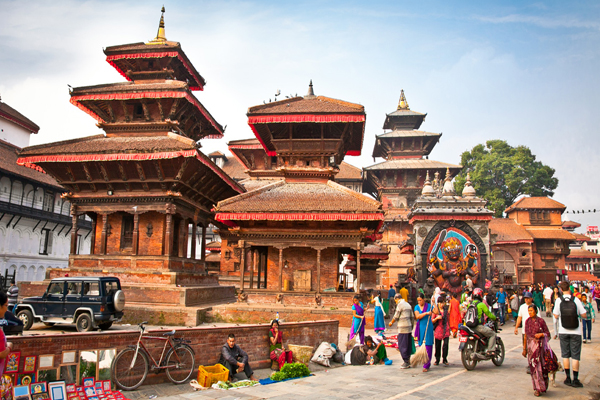
Kathmandu City: Here you will visit the temple of the Living Goddess, who acknowledges the greetings of the devotees from the balcony of her temple residence.
Kasthamandap – the source of the name Kathmandu and supposed to be made from the timber of a single tree. The Kumari Goddess: Chosen at the age of four or five, the Kumari Devi is the most important of the several living goddesses in Nepal, selected using very strict criteria, she moves into the temple with her family.
Swayambhunath: Perched on a hilltop on the southwestern part of Kathmandu, Swayambhunath is one of the most important religious and cultural sites in Nepal and is associated with the birth of the Kathmandu Valley civilization.
Pashupatinath: The temple of Pashupatinath located on the western banks of the Bagmati river on the north eastern side of Kathmandu, is one of the most important Hindu pilgrimage site in the world. The temple and its surrounding complex is surrounded by a pantheon of other temples like the Kirateswore Mahadev, Bhairav, Guheswori, and Gorakhnath each of whom have their own tale of origin and importance. Pashupatinath is also a UNESCO World Heritage Site.
Bouddhanath: With a base of 82 meters in diameter, Bouddhanath is claimed to be the largest Buddhist stupa in the world. Today there are more than 50 monasteries surrounding Bouddhanath which is also one of the seven Monument Zones which make up the Kathmandu Valley World Heritage Sites.
Overnight in Kathmandu.
Day 3: Sightseeing tour of Patan and then drive to Nagarkot
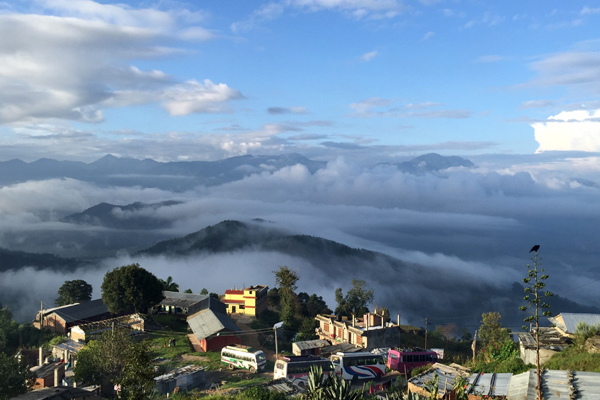
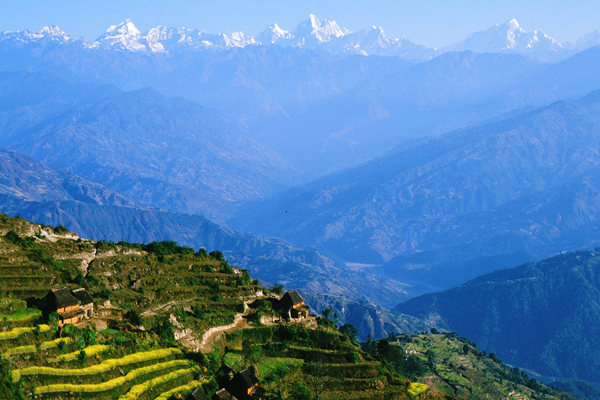
After breakfast you will start on a tour of Patan and proceed to scenic Nagarkot.
Patan or Yala: Patan as it is known today is located on the southern banks of the Bagmati River and is one of the three main cities in Kathmandu Valley. Patan is famous for its amazing collection of fantastically carved temples, palace courtyards, water spouts, public baths and houses with their equally elaborate wood, stone and metal carvings under the patronages of the Kirat, Lichivi and Malla kings. Patan has more than a 1000 temples and monuments dedicated to the uniquely Nepali mix of Buddhist and Hindu gods, chief among which are the mounds erected by the great Indian Emperor Asoka in the four corners of the city when he visited Nepal in 250 BC. Patan Durbar square is one of the seven Monument Zones that make up the Kathmandu Valley UNESCO World Heritage Site.
Overnight in Nagarkot.
Day 4: Sunrise view and later drive back to Kathmandu, on the way visit Bhaktapur city
After watching a spectacular sunrise followed by breakfast you will visit Bhaktapur enroute to Kathmandu.
Bhaktapur: Bhaktapur also known as Bhadgaon is an old city which was probably founded in the ninth century. This city is extraordinarily beautiful because of its ancient architecture of pagoda style copper roofs on wooden and mud-brick buildings. An authentic representation of the Nepali culture Bhaktapur is said to look like what Kathmandu was before centuries ago before the arrival of the modern era. Bhaktapur is also among the seven Monument Zones that make the valley World Heritage Sites.
Overnight in Kathmandu.
Day 05: Departure from Kathmandu
After breakfast you will be transferred to Kathmandu International airport for your departure flight.







Copyright © 2025 WLJ Travel Genres | All Rights Reserved.
Disclaimer | Privacy Policy | Terms & Conditions | Terms of Use